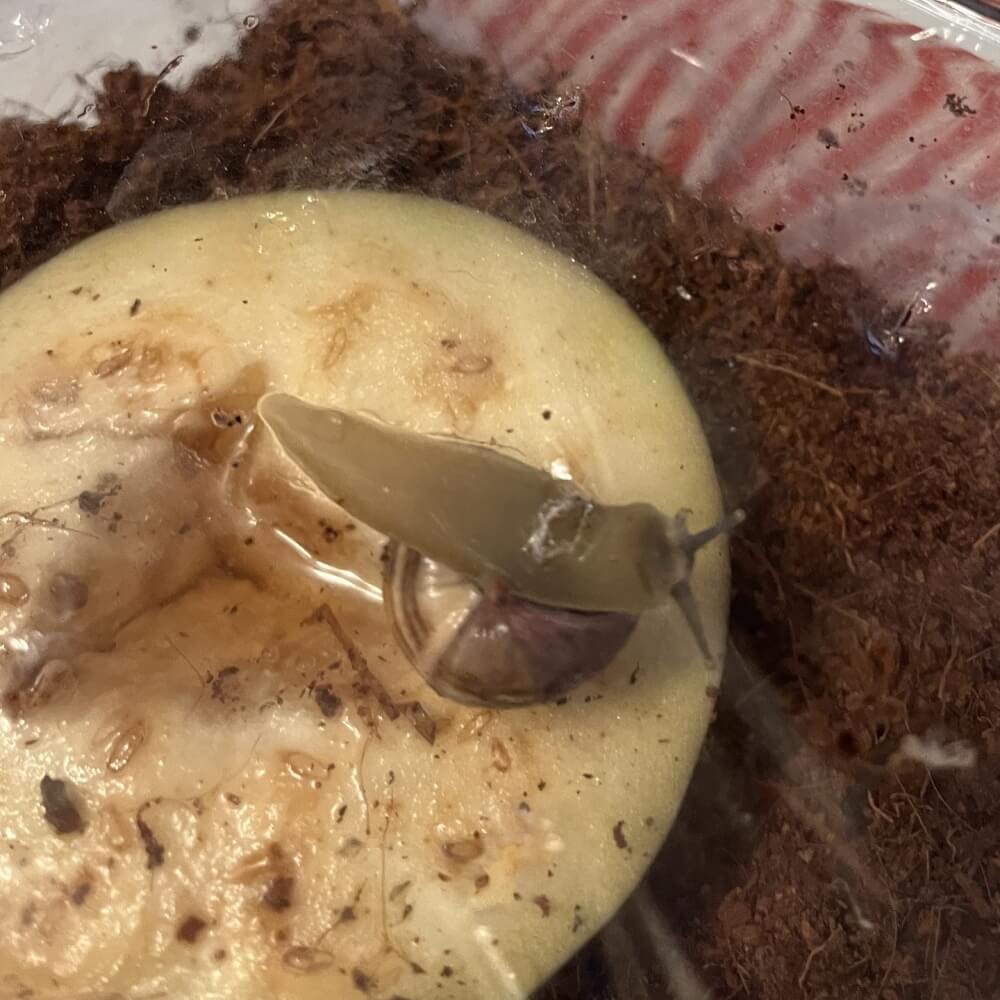
To whom it may concern,
Slugs are gastropod mollusks. All land slugs are part of the same Order, Stylommatophora, and essentially snails that have reduced or internalized their shell through evolution. Sea slugs, on the other hand, come from various Orders and are widely different from each other. But they are still gastropods.
Essentially, the term “slug” is a functional (morphological) term, not a taxonomic one.
As a snail, I’d love to call it a day here, but I have noticed that the word “slug” seems to be used in a lot of different ways in the English language.
Slugs in Website URLs
Observe, for example, that this page is hosted on a URL that reads:
/gremlins/posts/2026/what-is-a-slug-anyway/
The last part, /what-is-a-slug-anyway, is known as the “slug”. It’s a human-readable, URL-friendly, portion of the link that tells you what the post is about. Sort of.
Where does this high-tech, digital term come from? Metal, and newspapers. Yes, really.
Journalism
In the 1920s, “slug” emerged at the placeholder name given to a story. A sort of unique identifier for what you were working on, before the piece is ready and gets its final title.
Imagine you are doing a story on lettuce quality decreasing due to increased gamma ray exposure. You might call this, internally, as the “lettuce-gamma-ray story”. It already looks like a URL slug, huh? But where did journalists adopt this from?
Newspaper Typesetting
The title of the story, would be imprinted on the paper by a linotype machine, via a hot-metal typesetting. In this process, a “slug” referred to a cast line of type metal. A physical metal strip.
But where did they get this from?
Metal Slug
Any “lump of metal” was referred to as a slug. Most often, it was used for bullets and counterfeit coins (the kind you put into a machine, not give to a cashier).
We can see the typesetting connection, since the machine was using metal lumps (slugs).
The Root Word
The likely root word for all of these definitions, including my cousins the slugs, is the Middle English “slugge”, originally meaning a slow, lazy person. This, in turn, was borrowed from some of the Nordic languages, likely Norwegian, where it had a similar meaning.
In short:
- slug, as in the animal, refers to the “slow” aspect of “slugge”
- slug, as in the URL, newspaper title, and metal, likely comes from the “lump” aspect of “slugge” (a lazy lump!)
Bonus Round — Verbs!
We covered a lot of nouns, but what about the verbs? The two most interesting ones are:
- to slug, as in to hit someone with a heavy blow
- to slug (down), as in to drink something in gulps
The first one might come from “slugge” as well, or rather, the “metal” relationship. The implication of the blow being “heavy” is our biggest hint here. When you slug someone, it’s like hitting them with a heavy object, kind of like a lump of metal. This is not confirmed, but it is considered the most likely.
Another candidate is the Proto-Germanic slagiz. The interesting part of that connection is that “slagiz” is the grandparent of the English word “slay”. The connection might be interesting: perhaps you “slug” something to “slay” it? This is not confirmed.
As for “slug (down)” we’re less sure. The “lump” angle is possible, because we have evidence of a “slug of whiskey” being used for a shot. So we have a “lump of liquor” being called a “slug”, from which we might conclude the creation of the verb itself. (Down a slug of whiskey—to just slug it down.)
But there is another potential connection: sluicid. This Old Irish word is the grandparent of Irish “slog”, which means “to swallow” (not in the slug/gulp kind of way, mind you).
Interesting stuff. Let me know if you find any more connections.
Don’t slug the slugs,
—Zuki